



Email
[email protected]
How to Fix My Immigration Papers in the United States if I Have Family Here: Updated 2026
Table of Contents
If you live in the United States without legal status or with an uncertain immigration status, it is normal to wonder whether your family can help you “fix your papers.” In 2026, many people obtain permanent residence through a spouse, child, parent, or another family member, but not everyone qualifies in the same way or within the same timeframe.
In this article, we explain in simple language the most common options for families, how long they may take, and why it is so important to review your immigration history before taking any step.
Who Can Petition for You to Fix Your Papers in 2026
Not every family member can help you obtain permanent residence. Immigration law has very specific rules regarding who can petition for whom.
Family Members Who Can Petition for You:
- U.S. citizen spouse or lawful permanent resident spouse.
- U.S. citizen son or daughter who is at least 21 years old.
- U.S. citizen parent, if you are single and under 21, or if you fall into another family-based category.
- U.S. citizen sibling who is at least 21 years old, although this category often takes many years.
In almost every case, the first step is for your family member to file Form I-130, Petition for Alien Relative with USCIS to prove the family relationship.
What Does “Fixing Your Papers Without Leaving” vs. “Fixing Your Papers by Leaving the Country” Mean?
One of the key points is whether you can complete the process inside the United States through adjustment of status or whether you must leave the country and attend an interview at a U.S. consulate abroad through consular processing.
Adjustment of Status: Fixing Your Papers Inside the United States
Adjustment of status is the process of applying for permanent residence without leaving the country by using Form I-485.
In general, to qualify, you must:
- Have entered with a visa or been legally admitted, such as through parole.
- Have an approved family-based petition and an immigrant visa available for your category.
- Not be subject to certain grounds of inadmissibility, such as certain criminal convictions or immigration fraud.
In 2026, many immediate relatives of U.S. citizens, including spouses, parents, and unmarried children under 21, may adjust their status if they meet these requirements. In many cases, typical processing times range from approximately 12 to 24 months.
Consular Processing: Fixing Your Papers From Outside the United States
If you cannot adjust your status inside the United States, completing the process at a U.S. consulate abroad may sometimes be the only option.
In these cases, the I-130 is approved first. The case then moves to the National Visa Center and the consulate for an interview. Depending on your immigration history, you may need a waiver for unlawful presence bars or other immigration issues.
Basic Steps to Fix Your Papers Through a Family Member in 2026
The details vary depending on your situation, but the general process is usually as follows.
Step 1: Your Family Member Files Form I-130
The family member who wants to petition for you, known as the petitioner, files Form I-130 with evidence showing:
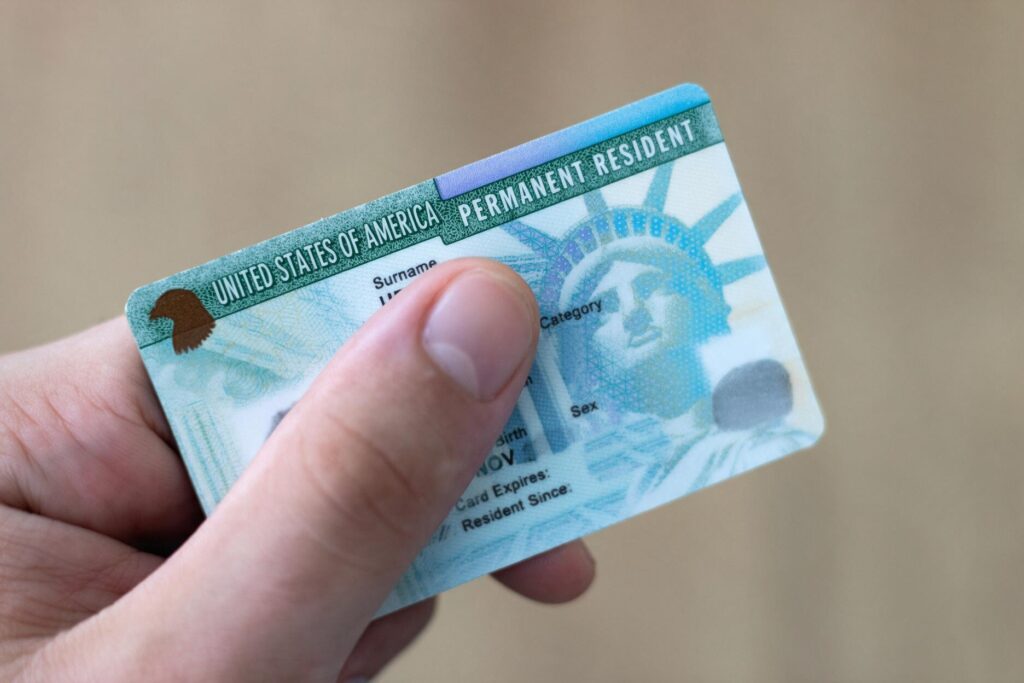
- That they are a U.S. citizen or lawful permanent resident, such as a U.S. birth certificate, naturalization certificate, or Green Card.
- That a genuine family relationship exists, such as a marriage certificate or birth certificates.
In 2026, Form I-130 may take anywhere from several months to more than a year, depending on the category and the service center processing the case.
Step 2: Determine Whether You Will Use Adjustment of Status or Consular Processing
Once a family-based petition has been approved and an immigrant visa is available, you must determine whether you will use:
- Adjustment of status through Form I-485 inside the United States.
- Consular processing if you are outside the country or do not qualify for adjustment of status.
This is where your immigration history, including entries, departures, arrests, and previous orders, is critical to avoid making a mistake that could result in a denial or immigration bars.
Step 3: Submit Forms and Supporting Evidence
During the final stage, you submit forms and evidence such as:
- Form I-485, if you are adjusting your status, medical examinations, photographs, passport, and Form I-94.
- Form I-864, Affidavit of Support, from the family member sponsoring you.
- Civil documents, including certificates, records of criminal history, and certified translations.
USCIS or the consulate may request additional evidence through an Request for Evidence (RFE) if anything is missing.
Step 4: Interview and Decision
In most cases, you will have to attend an interview, either at a USCIS office inside the United States or at a consulate. An officer will review your documents, ask questions about your immigration and family history, and decide whether to approve or deny your application for permanent residence.
How Long Can a Family-Based Petition Take in 2026?
Processing times in 2026 vary significantly depending on the family relationship and whether the immigrant visa is immediately available.
Some general examples include:
- Spouse, minor child, or parent of a U.S. citizen: In many cases, the complete process, including the I-130 and permanent residence application, may take approximately 12 to 50 months, depending on USCIS workloads and the type of process.
- Spouse of a lawful permanent resident or children in certain categories: These cases may take several years because they are subject to annual visa limits.
- Siblings of U.S. citizens: The wait may often be many years, depending on the country of origin and the category listed in the Visa Bulletin.
It is important to always review the official USCIS processing times and the Visa Bulletin because they change frequently.
Situations That Can Make It More Difficult to Fix Your Papers Even if You Have Family
Having family in the United States does not guarantee that fixing your immigration status will be simple. Certain situations can make your case more complicated, including:
- Entering without a visa and having multiple entries or departures without authorization.
- Previous deportation orders or missed court hearings.
- Certain criminal convictions or a history of fraud or misrepresentations to immigration authorities.
- Long periods of being out of status without special protection.
In these situations, it is essential for an attorney to review your complete history before you file any application to determine whether waivers are available or whether another strategy may be more appropriate.
What You Can Do Today if You Want to Fix Your Papers Through Your Family
If you are asking yourself, “How can I fix my immigration papers in the United States in 2026 if I have family here?” These are clear steps you can take now:
- Gather basic information: how you entered the country, whether you left the country, and whether you have had immigration court cases, arrests, or previous deportations.
- Obtain copies of your documents: your passport, Form I-94 (if you have one) immigration letters, court orders, and marriage and birth certificates.
- Talk with the family member who may be able to petition for you, such as a spouse, child, or parent, to verify their status and willingness to sign the necessary documents.
- Schedule a legal consultation to review your history and explain which specific option may be available to you, such as a family-based petition with adjustment of status, consular processing with a waiver, another option, or whether it may be wiser to wait.
If you have family in the United States and want to know whether you can actually fix your immigration papers in 2026, do not rely only on general information found online. During a personalized consultation, an immigrantion attorney can review your entry, departures, criminal history, and family ties to develop a realistic strategy for your case.
You can use this article as a guide to help you arrive better prepared for that appointment. The clearer your documents and information are, the faster it will be possible to evaluate whether your family is the key to obtaining permanent residence.
Featured Articles
Evaluate your case with an immigration attorney.
At Zhanay Law, we analyze your situation and provide legal guidance to move forward with confidence.
Contact