




Email
[email protected]
Green Card vs. U.S. Citizenship: Differences, Benefits, and Risks
Table of Contents
If you already have or are seeking a Green Card, also known as permanent residence, in the United States, sooner or later you may ask yourself: should I remain a permanent resident or take the next step toward citizenship? Although both statuses allow you to live legally in the country, the rights, benefits, and risks are very different.
In this guide, you will find the main differences between a Green Card and U.S. citizenship, so you can understand what you gain and what you risk with each option before deciding on your next step.
What the Green Card and U.S. Citizenship Are
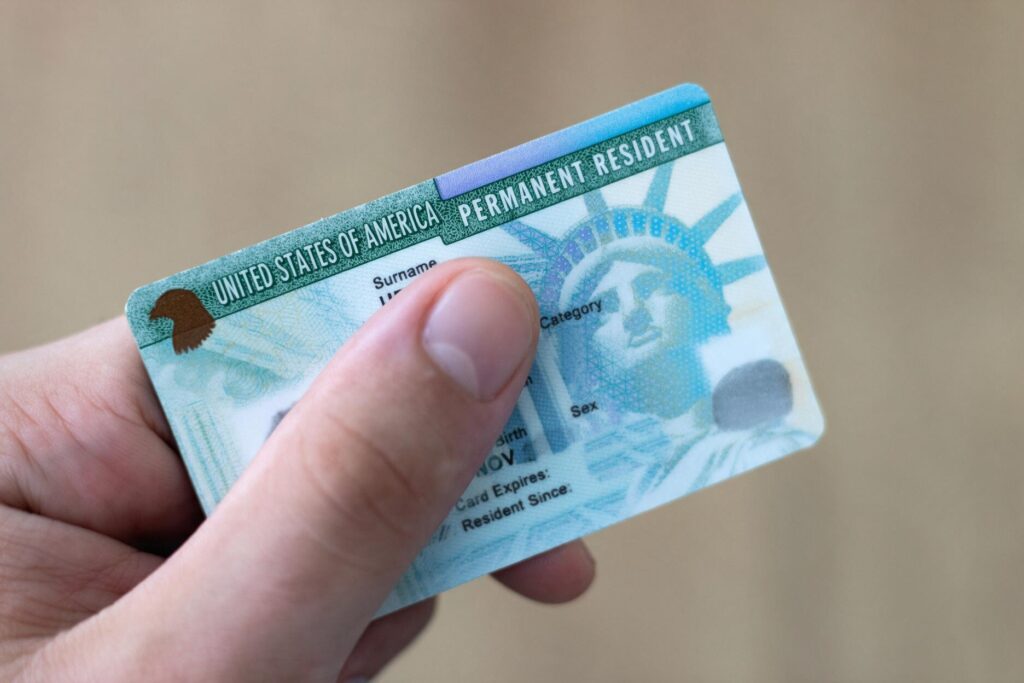
The Green Card, or permanent resident card, is the document that proves you are a lawful permanent resident of the United States and allows you to live and work indefinitely in the country. You remain a citizen of your country of origin, but you have the right to stay and work in the U.S. as long as you comply with immigration laws.
U.S. citizenship is the highest legal status. It may be acquired by birth, through U.S. citizen parents, or through naturalization after spending several years as a permanent resident. A citizen has full political rights, greater protection from deportation, and access to benefits that are not available to permanent residents.
Key Differences in Rights
Although permanent residents and citizens share certain basic rights, there are key differences that can significantly affect your long-term stability.
What You Can Do With a Green Card
As a Green Card holder, you have the right to:
- Live permanently in the United States, as long as you do not commit actions that could make you deportable.
- Work in almost any legal job in the private sector.
- Be protected by federal, state, and local laws.
At the same time, you have responsibilities, such as obeying the law, filing tax returns, and, if you are a man between the ages of 18 and 25, registering with the Selective Service.
What You Can Do as a U.S. Citizen
As a citizen, in addition to the rights of a permanent resident, you may:
- Vote in federal, state, and local elections.
- Run for most public offices and serve on juries.
- Sponsor more family members and, in some cases, benefit from faster immigration processes.
- Obtain a U.S. passport and have greater ease when traveling.
In addition, citizenship provides significantly stronger protection from deportation and greater legal security in the long term.
Benefits of Keeping Only a Green Card
Not all permanent residents rush to become naturalized citizens. In some cases, keeping only a Green Card may be a reasonable option.
Typical benefits of remaining a permanent resident include:
- Fewer civic obligations, since there is no duty to vote or serve on juries.
- The ability to maintain certain nationalities of origin without complications in countries where dual citizenship is difficult.
- Stability to live and work in the U.S. without immediately having to give up ties to your country of origin.
For people who do not plan to live in the United States for the rest of their lives, a Green Card may be sufficient, as long as they comply with immigration rules.
Disadvantages and Risks of Keeping Only a Green Card
This is the point that many people underestimate: being a permanent resident does not provide the same level of security as being a citizen.
Key risks of remaining only a permanent resident include:
- Risk of deportation: Certain crimes, immigration fraud, or prolonged absences may lead to the loss of your Green Card and removal proceedings.
- Travel and absence limitations: If you spend too much time outside the country, such as during long periods without a reentry permit, you may be considered to have abandoned your residence.
- Renewals and periodic procedures: The card is generally renewed every 10 years, which involves costs and possible reviews.
- Less ability to sponsor family members: You may generally petition only for your spouse and unmarried children, and the wait is often longer than it would be for a citizen.
- No right to vote or access to many public-sector or security-related jobs.
In short, a Green Card provides stability, but it leaves the permanent resident subject to a level of immigration oversight that citizens no longer face.
Main Benefits of Becoming a U.S. Citizen
Moving from permanent resident status to citizenship is often the “natural next step” for many immigrants, especially after they have built their lives in the United States.
Key benefits of citizenship include:
- Protection from deportation: In practice, a citizen cannot be deported because of crimes or absences, except in rare cases involving serious naturalization fraud.
- Voting and political participation: You can influence laws, immigration policies, and government officials who directly affect your life.
- More options for bringing family members to the United States: You can sponsor your spouse, unmarried and married children, parents, and siblings, with more favorable processing times for immediate relatives.
- Greater freedom to live outside the U.S. without losing your status: Citizens may spend long periods abroad without risking the loss of their citizenship.
- Access to jobs and benefits reserved for citizens: Certain federal jobs, benefits, and programs are available only to citizens.
- No more Green Card renewals or periodic payments to maintain permanent resident status.
From an economic perspective, various studies indicate that citizenship may increase income and long-term financial stability.
Risks or “Drawbacks” of Becoming a Citizen
Although citizenship is usually advantageous, it may also involve decisions and responsibilities that not everyone wants to assume.
Things to consider before applying for naturalization include:
- Taxes and possible worldwide tax obligations: Some countries of origin and the United States have complex rules when multiple citizenships are involved, especially if you maintain income or property abroad.
- Decisions regarding dual citizenship: Not all countries accept dual nationality without conditions. In some cases, you may have to give up your original nationality or complete additional procedures.
- Civic obligations: Jury service, greater expectations regarding civic participation, and political involvement.
Therefore, although the benefits are generally greater, it is advisable to carefully analyze your personal, family, and tax situation before applying for naturalization.
Green Card vs ciudadanía: comparativa rápida
| Category | Green Card (Permanent Residence) | U.S. Citizenship |
|---|---|---|
| Legal status | Permanent resident | Citizen, the highest legal status |
| Right to live and work | Yes, as long as you comply with immigration laws | Yes, without routine immigration oversight |
| Risk of deportation | Yes, for certain crimes, fraud, or prolonged absences | Very limited; only in rare cases involving naturalization fraud |
| Voting in elections | Cannot vote | Can vote at all levels |
| Family sponsorship | Spouse and unmarried children, with more limitations and longer waits | Spouse, unmarried and married children, parents, and siblings |
| Travel and time outside the U.S. | Long absences may put your permanent residence at risk | May live abroad without losing citizenship |
| Status renewal | The card is renewed every 10 years | Citizenship does not need to be renewed |
| Access to public and sensitive jobs | Limited; many positions require citizenship | Expanded; may qualify for more federal jobs |
| Civic obligations | Fewer obligations; cannot vote or serve on juries | More obligations, including voting, jury service, and civic participation |
Which Option Is Best for Your Situation?
Generally speaking:
- If you plan to live permanently in the United States, have family here, and want maximum legal security, citizenship is often the natural goal after spending several years with a Green Card.
- If your plans in the U.S. are more temporary or your country of origin has strict restrictions on dual citizenship, you may consider keeping your Green Card, but you must accept its risks.
Before making a decision, it is important to carefully review your immigration situation and background. If you need legal assistance, Zhanay Law can analyze your case and clearly explain your options. We are experienced immigration attorneys who speak Spanish and English, so you can feel supported throughout the entire process.
Featured Articles
Evaluate your case with an immigration attorney.
At Zhanay Law, we analyze your situation and provide legal guidance to move forward with confidence.
Contact